

Yo, what's up everyone! I'm a supplier of Dante Mixers, and today I wanna talk about something that's super important in the audio world - the latency of Dante Mixers.
First off, let's get into what latency actually is. In simple terms, latency is the delay between when an audio signal goes in and when it comes out. It's like when you yell into a big empty hall, and there's a bit of a pause before you hear the echo. In the audio tech world, this delay can be a real pain in the butt, especially in live sound setups or recording studios where every millisecond counts.
So, how does latency affect Dante Mixers? Well, Dante is a really popular audio networking technology. It allows you to send and receive audio signals over an Ethernet network. And with Dante Mixers, we're talking about mixing consoles that use this Dante tech to handle audio.
The latency in Dante Mixers can come from a few different places. One of the main sources is the processing time. Every time an audio signal goes through the mixer, it has to be processed. This includes things like equalization, compression, and routing. All these processes take a bit of time, and that adds to the overall latency.
Another factor is the network itself. When audio signals are sent over an Ethernet network, there can be some delay due to network congestion, bandwidth limitations, or even the distance the signal has to travel. You know, it's like traffic on the road. If there are too many cars (or in this case, data packets) on the network, things slow down.
Now, you might be thinking, "Okay, but how much latency are we actually talking about?" Well, the latency of Dante Mixers can vary depending on a bunch of things. For example, the model of the mixer plays a big role. Some of our 16 Channel Analog Mixer models have really low latency, thanks to their advanced processing chips and optimized software. They're designed to keep that delay to a minimum, so you get a more real - time audio experience.
The settings on the mixer also matter. If you have a lot of effects and processing turned on, the latency is gonna go up. It's like asking your computer to run a bunch of heavy - duty programs at the same time. It's gonna slow down. But if you keep things simple and just use the basic functions, you can reduce the latency significantly.
Let's talk about why low latency is so important. In a live sound environment, like a concert or a theater performance, low latency is crucial. Musicians need to hear themselves and each other in real - time. If there's a noticeable delay, it can throw off their timing and make the whole performance sound off. It's like trying to dance to a song that's out of sync.
In a recording studio, low latency is also a must. When recording vocals or instruments, you want the artist to hear what they're playing or singing right away. Otherwise, it can be really hard for them to perform at their best. And when it comes to mixing and mastering, having low latency means you can make more accurate adjustments to the audio.
Now, I know what you're thinking. "How can I make sure I'm getting the lowest latency possible with my Dante Mixer?" Well, here are a few tips. First, make sure your network is in good shape. Use a high - quality Ethernet cable and a reliable switch. Avoid using Wi - Fi for your audio network, as it can be really unpredictable and add a lot of latency.
Second, keep your mixer's software up to date. The manufacturers are always working on improving the software to reduce latency and improve performance. So, make sure you're running the latest version.
Also, don't over - load your mixer with too many effects and processing. Only use what you really need. And if you're using multiple mixers in a setup, make sure they're all configured correctly to work together efficiently.
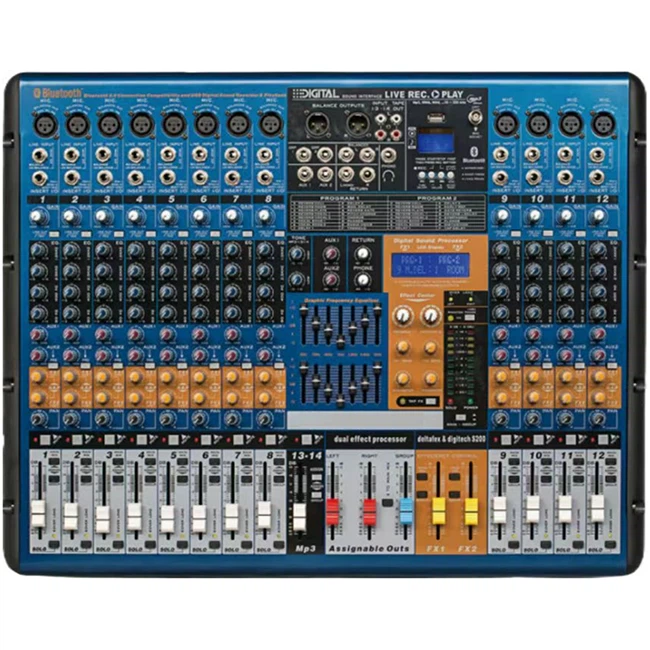
Our company offers a range of Dante Mixers, including the 12 Channel Powered Mixer and the 32 Channel Analog Mixer. These mixers are designed with low latency in mind, and they've been tested and proven to deliver great audio performance.
If you're in the market for a Dante Mixer, whether you're a professional audio engineer, a musician, or someone setting up a home studio, we'd love to have a chat with you. We can help you find the right mixer for your needs and answer any questions you might have about latency or any other aspect of our products. Just reach out, and we'll start the conversation.
In conclusion, the latency of Dante Mixers is an important factor to consider when choosing an audio mixer. It can have a big impact on the quality of your audio, whether you're in a live or studio environment. By understanding where latency comes from and how to minimize it, you can get the best performance out of your mixer. So, don't hesitate to contact us if you're interested in learning more or making a purchase.
References

- Audio Engineering Society Publications on Networked Audio Latency
- Dante Alliance Technical Documents