

Hey there! As a supplier of PA amplifiers, I often get asked about the power supply requirements for these nifty devices. So, I thought I'd take a moment to break it all down for you.
First off, let's talk about what a PA amplifier is. A PA, or public address, amplifier is used to increase the power of an audio signal so it can be broadcast over a large area. You'll find them in all sorts of places, like schools, churches, stadiums, and even some home audio setups. They're pretty versatile and come in a bunch of different types, like the Class D Audio Amplifier, WIFI Streaming Amplifier, and 8 CH Amp.
Now, when it comes to power supply requirements, there are a few key factors to consider. The first one is voltage. PA amplifiers typically operate on either AC (alternating current) or DC (direct current) power. Most of the time, you'll find that larger, more powerful amplifiers use AC power, while smaller, portable ones might run on DC.
AC power is what you get from your standard wall outlet. It's convenient because it's readily available, but you need to make sure the voltage of the outlet matches the amplifier's requirements. In the United States, the standard household voltage is 120V, while in many other countries, it's 220V or 240V. If you're using an amplifier in a different country, you might need a voltage converter to make sure it works properly.
DC power, on the other hand, is often used in battery-powered or vehicle-mounted amplifiers. Batteries provide a steady stream of DC power, which can be great for portability. But you need to keep an eye on the battery level and make sure it's charged up. Some DC-powered amplifiers can also be connected to a power adapter that plugs into an AC outlet, giving you more flexibility.
Another important factor is power consumption. This is measured in watts and tells you how much electrical energy the amplifier uses. The power consumption of a PA amplifier can vary widely depending on its size, features, and how hard it's working. A small, basic amplifier might use only a few watts, while a large, high-powered one could use hundreds or even thousands of watts.
It's crucial to know the power consumption of your amplifier so you can choose the right power supply. If you use a power supply that can't provide enough power, the amplifier might not work properly or could even be damaged. On the other hand, using a power supply that's too powerful is a waste of energy and could also be a fire hazard.
Let's take a closer look at some of the different types of PA amplifiers and their power supply requirements.
The Class D Audio Amplifier is known for its high efficiency. This means it can convert a large percentage of the electrical power it receives into audio power, with less wasted as heat. Class D amplifiers usually have a relatively low power consumption compared to other types of amplifiers. They can often run on a lower voltage power supply, making them a good choice for battery-powered applications or for use in areas where power is limited.
The WIFI Streaming Amplifier combines the functionality of a PA amplifier with the ability to stream audio wirelessly over a WIFI network. These amplifiers typically have built-in WIFI modules, which add to their power consumption. They usually require a stable power supply to ensure a reliable WIFI connection and high-quality audio playback. Most WIFI streaming amplifiers operate on AC power and need to be plugged into a wall outlet.
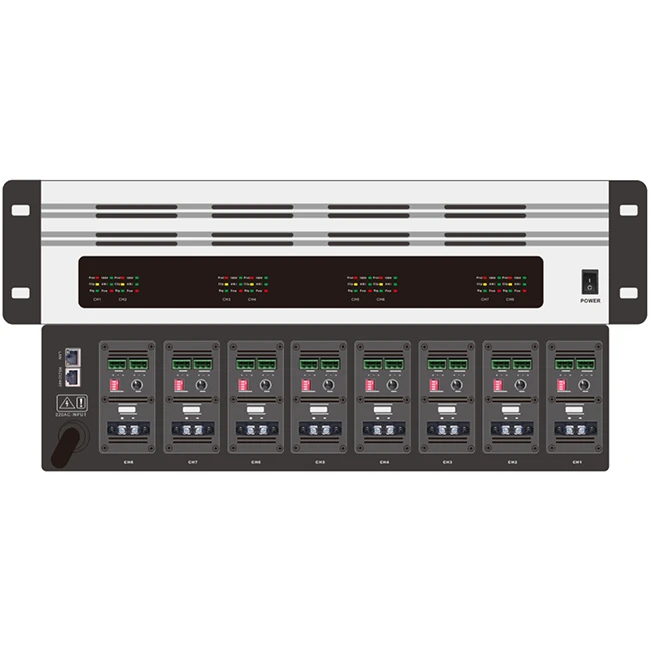
The 8 CH Amp is a multi-channel amplifier that can power multiple speakers simultaneously. With more channels comes more power requirements. These amplifiers are often used in large-scale audio systems, such as in stadiums or concert halls. They usually have a high power consumption and need to be connected to a robust AC power supply. It's also important to make sure the electrical circuit can handle the load of the amplifier to avoid tripping breakers or causing other electrical problems.
In addition to voltage and power consumption, you also need to consider the current rating of the power supply. Current is measured in amperes (amps) and tells you how much electrical charge is flowing through the circuit. The current rating of the power supply should be at least equal to or greater than the maximum current draw of the amplifier. If the current rating is too low, the power supply might not be able to provide enough power to the amplifier, leading to poor performance or damage.
When choosing a power supply for your PA amplifier, it's always a good idea to read the manufacturer's specifications carefully. They'll usually provide detailed information about the voltage, power consumption, and current requirements of the amplifier. You can also look for a power supply that's specifically designed for PA amplifiers. These power supplies are often optimized to provide the right amount of power and have built-in safety features to protect the amplifier from power surges and other electrical problems.
So, there you have it – a rundown of the power supply requirements for PA amplifiers. If you're in the market for a PA amplifier or need help choosing the right power supply, don't hesitate to reach out. We're here to assist you in finding the perfect solution for your audio needs. Whether you're setting up a small PA system for a local event or a large-scale audio installation for a commercial venue, we've got the expertise and products to get the job done right.

If you have any questions or want to discuss your specific requirements, feel free to contact us. We're always happy to have a chat and help you make the best choice for your situation. Let's work together to create an amazing audio experience!
References
- Various industry publications on audio equipment and power supply technology.
- Manufacturer's specifications for PA amplifiers.