

Hey there, audio enthusiasts! As a supplier of Digital PA Mixers, I've had my fair share of chats with folks who are both new to the game and seasoned pros. One question that keeps popping up is about the reverb effect in a Digital PA Mixer. So, let's dive right in and break it down.
First off, what's reverb? In simple terms, reverb is the reflection of sound waves off surfaces in an environment. When you're in a big hall or a cathedral, you've probably noticed that the sound seems to linger, kind of echoing around. That's reverb in action. In the real world, it's caused by sound bouncing off walls, ceilings, and floors. In a Digital PA Mixer, though, it's a digital simulation of those real - world acoustic effects.
The beauty of having reverb in a Digital PA Mixer is that it gives your audio that extra depth and space. Imagine you're mixing a live band performance. Without reverb, the sound can seem flat and dry, like it's coming from a small, empty room. But when you add a touch of reverb, it can make the music sound like it's being played in a large, concert - worthy venue. It fills out the sound, making it more immersive for the listeners.

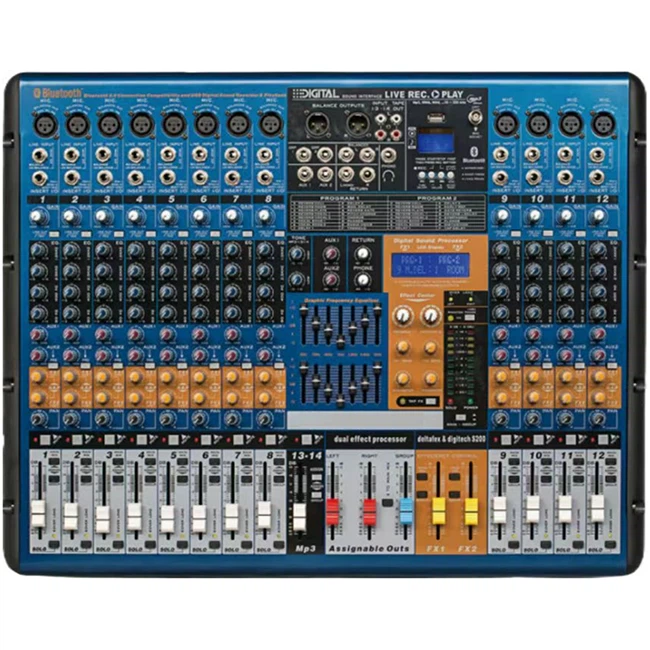
There are different types of reverb effects you can find in a Digital PA Mixer. Plate reverb is one of the classics. Back in the day, it was created using large metal plates. The sound would be sent to the plate, and the vibrations of the plate would create the reverb effect. In a digital mixer, it's emulated to give that warm, rich sound that plate reverb is known for. It's great for adding a bit of glamour to vocals or adding a smooth touch to piano sounds.
Spring reverb is another type. Historically, it was used in guitar amplifiers. The sound would travel through springs, and the vibrations of the springs would create the reverb. In a Digital PA Mixer, it gives a more twangy, splashy reverb effect. It's often used in surf music to create that distinct, echoey sound that makes you feel like you're at the beach.
Hall reverb is designed to mimic the sound of a large concert hall. It has a long decay time, which means the sound fades out slowly, giving that grand, spacious feel. This is perfect for orchestral music or any performance where you want to create a sense of grandeur.
Now, let's talk about how you can use reverb in your Digital PA Mixer. Most mixers have dedicated reverb controls. You can adjust the amount of reverb, the decay time (how long the reverb lasts), the pre - delay (the time between the original sound and the start of the reverb), and the diffusion (how spread out the reverb sounds).
When you're mixing, it's important not to go overboard with reverb. Too much reverb can make the sound muddy and unclear. You want to use it as a tool to enhance the sound, not overpower it. For example, if you're mixing vocals, you might start with a small amount of reverb to add a bit of warmth and depth. You can then adjust the settings until it sounds just right.
As a Digital PA Mixer supplier, I know that different mixers come with different reverb capabilities. Our 20 Channel Mixer offers a wide range of reverb presets, allowing you to quickly get the sound you want. Whether you're going for a classic plate reverb or a modern hall reverb, this mixer has you covered.
If you're looking for something a bit more compact but still powerful, our 12 Channel Powered Mixer is a great option. It also has excellent reverb effects that can take your audio to the next level.
And for those who need a professional - grade mixer for large - scale events, our Pro Mixer is the way to go. It has advanced reverb controls, allowing you to fine - tune the reverb to your exact specifications.
So, why is reverb so important in a Digital PA Mixer? Well, it's all about creating a more engaging audio experience. Whether you're a musician, a sound engineer, or someone who just loves great - sounding audio, reverb can make a huge difference. It can transform a simple, dry mix into a rich, immersive soundscape.
If you're interested in learning more about our Digital PA Mixers and how their reverb effects can benefit your audio projects, don't hesitate to reach out. We're here to help you find the perfect mixer for your needs. Whether you're a small - time gig performer or a large - scale event organizer, we've got a mixer that can meet your requirements.
In conclusion, reverb in a Digital PA Mixer is a powerful tool that can enhance the quality of your audio. It allows you to create different acoustic environments, adding depth and character to your sound. So, if you haven't already, give it a try and see how it can transform your mixes.
If you're thinking about purchasing a Digital PA Mixer and want to discuss the reverb options and other features, feel free to get in touch. We're always happy to have a chat and help you make the right decision for your audio setup.
References
- Audio Engineering Society (AES) publications on digital audio effects
- Various product manuals of Digital PA Mixers for reverb functionality details